


Alright, let’s dive into something that’s been buzzing in the wire cut EDM world lately: cutting force. If you’re in the machining game, you’ve probably heard folks talk about it, but maybe you’re not 100% sure what it actually means—especially when it comes to wire cut EDM. Spoiler: it’s not like the force you’d feel pushing a saw through metal. Let’s break this down, throw in some real-world context from our side as a wire cut EDM supplier, and show why it matters for your shop.
First off, let’s get one thing straight: wire cut EDM is all about electrical sparks, not physical cutting with a solid tool. So you might be thinking, “Cutting force? How does that even apply here?” Great question. I used to scratch my head about this too when I first started learning the ins and outs of EDM tech, back when I was troubleshooting our machines for a local tool and die shop. Turns out, cutting force in wire cut EDM isn’t the same as in traditional milling or turning. It’s a bit more subtle, but it’s just as critical—like the quiet backbone that keeps your cuts accurate and your machine running smooth.
Let’s define it properly. From what our engineers have explained over the years, cutting force in wire cut EDM refers to the mechanical forces exerted on the thin wire electrode as it interacts with the workpiece during the spark erosion process. Wait, but sparks don’t push on things—right? Well, not exactly. The plasma channel created by the spark does have a tiny amount of pressure, and the wire is under tension while it’s feeding through the workpiece. That tension, combined with the minor forces from the plasma and the dielectric fluid flushing, adds up to what we call “cutting force.” It’s not a huge number—we’re talking in the millinewton range, not kilonewtons like traditional machining—but it’s enough to make a difference if you’re not accounting for it.
Let me put that into perspective. If you’re cutting a super hard material like tungsten carbide, which is used in a ton of aerospace parts, that tiny force can make the wire deflect ever so slightly. And even a 0.001-inch deflection on a 10-inch cut? That’s a bad day at the office. Suddenly your part’s not within tolerance, and you’re left with a scrap piece and a frustrated team. That’s why we spend so much time optimizing our machines to handle this force without losing precision.
Now, how is this force generated exactly? Let’s get a little technical, but keep it real. When the EDM power supply sends a pulse of electricity between the wire (negative, usually) and the workpiece (positive), it ionizes the dielectric fluid—usually deionized water or oil—creating a plasma channel. The temperature there hits 10,000°C or more, melting and vaporizing tiny bits of the workpiece. As that material is flushed away by the dielectric, the plasma channel collapses, creating a tiny shockwave. That shockwave, plus the drag from the dielectric flowing past the wire, and the tension we put on the wire to keep it straight, all contribute to that cutting force. It’s like a perfect storm of small forces that add up to something you can’t ignore.
Here’s where our experience as a wire cut EDM supplier comes in. We’ve worked with all kinds of shops—from small prototype places to big manufacturing plants—and we’ve seen first-hand how cutting force affects their output. For example, a while back, a client was using a generic high-speed wire EDM on a batch of thick titanium parts. They were getting inconsistent cuts, some with slightly tapered sides, and their wire was breaking more often than they liked. When we took a look, we realized their machine wasn’t calibrated to handle the cutting force on that thickness. The wire tension was too low, so the deflection from the plasma and fluid drag was causing the taper. We adjusted the parameters and swapped in a better wire feed rate, and suddenly their scrap rate dropped by 20%. That’s the kind of thing we live for—solving these problems with our machines.
Let’s talk about how different machines handle cutting force, because not all wire EDMs are created equal. We have a range of models, and each is built for specific jobs. Take our High Speed Wire Cut EDM line, for example. These are designed for roughing cuts where you need speed, and they handle cutting force by maintaining a consistent wire tension even at high feed rates. The key here is the tension control system—if the tension fluctuates, the force on the wire changes, leading to uneven cuts. Our high-speed models use precision load cells to keep tension steady, so you don’t have to worry about that.
Then there’s the OL530CR Precision Medium Speed Wire EDM. This one’s for when you need ultra-precise finishes, like for medical implants or mold inserts. Medium speed means slower wire feed, which reduces the plasma-related cutting force. The wire moves more gently through the workpiece, so the deflection is minimal. We’ve had clients use this model to make parts with tolerances down to 0.0001 inches—yeah, that’s super tight—and the cutting force is so well-managed that their repeatability is off the charts.
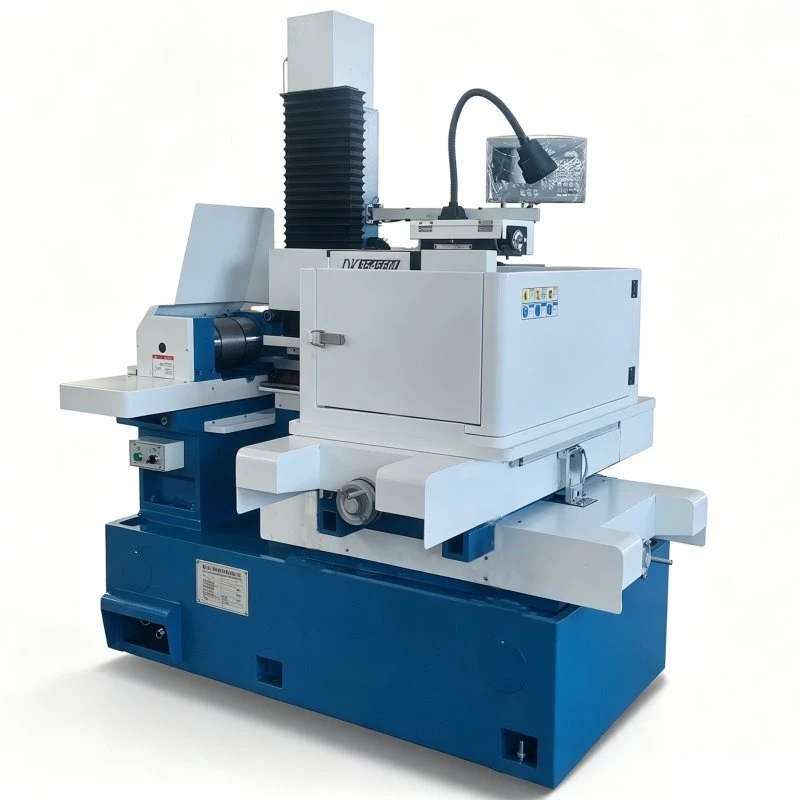
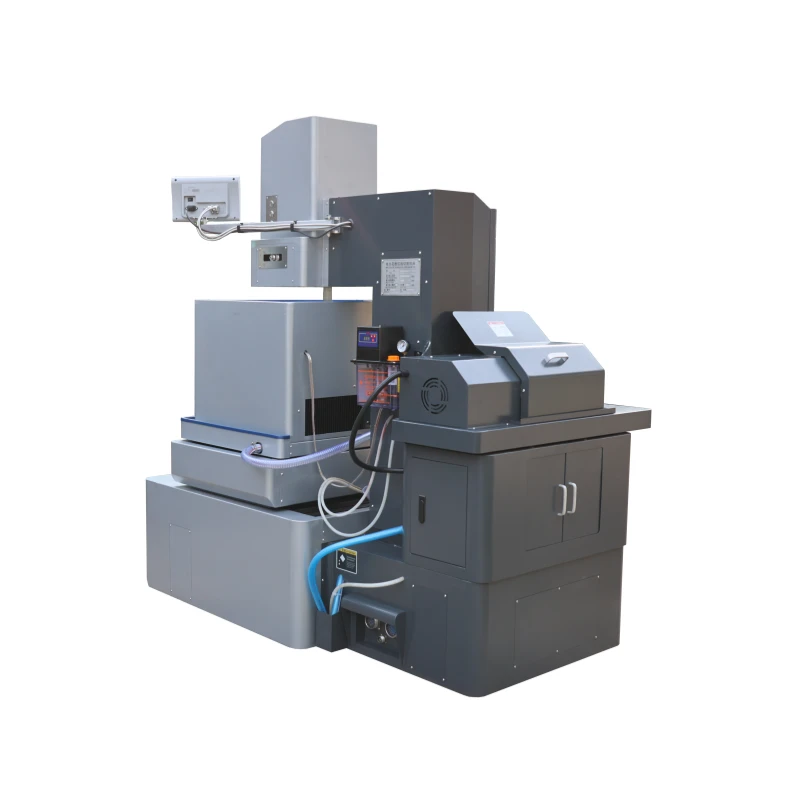
If you’re working on really large parts, our Large Wire EDM series is the way to go. These machines have a bigger work envelope, which means longer wire lengths. Longer wire means more potential for flex, so we’ve built in extra tension control and a rigid wire guide system to counteract the cutting force from the heavier cuts. A client in the heavy equipment industry used one of these to cut a 6-foot-long steel plate for a bulldozer part, and they told us the cut quality was consistent all the way through, no taper, no breakage. That’s the payoff when you design around cutting force.
Wait, let’s not forget about the smaller, more economical options. For a shop just starting out with wire EDM, the Economical Medium Speed Wire EDM is perfect. It doesn’t have all the fancy features of our precision models, but it still handles cutting force well enough for basic jobs like prototype parts or simple tooling. We test every one of these before it leaves the factory, making sure the wire tension is set correctly and the dielectric flushing is optimized to minimize force-related issues. It’s a great entry point without sacrificing quality.
Now, what can you as a machinist do to work with cutting force, not against it? Let’s share some tips we’ve picked up over the years. First, pick the right wire diameter. Thicker wire can handle more tension and more cutting force, which is good for thicker workpieces. Thinner wire is for intricate details, but you have to lower the cutting parameters to avoid breaking it. Second, get the tension right. Too low, and the wire deflects from cutting force; too high, and it snaps. Our machines have easy-to-read tension gauges, so you don’t have to guess. Third, make sure your dielectric flushing is set up properly. If the fluid isn’t flowing evenly around the cut, you’ll get uneven force on the wire, leading to poor cuts. Finally, use a machine that’s built to handle the force. Generic machines might cut corners on tension control or rigidity, which leads to problems down the line.
I know a lot of folks in the industry like to keep things straightforward, and cutting force can feel like a “techy” term that doesn’t matter for their day-to-day. But trust me, when you’re dealing with parts that have to fit together perfectly, or when you’re trying to hit a tight delivery date without scrap, every little factor counts. Cutting force is one of those factors that’s easy to overlook, but it can make or break a job.
Let’s circle back to that client I mentioned earlier with the titanium parts. They were using a different brand of machine, and they were burning through wire and missing tolerances. When they switched to our DK77100 Single Cutting Wire Cut EDM, which is a high-speed model for single-pass cuts, they saw an immediate difference. The machine’s wire tension system was more responsive to the cutting force, so they didn’t get that taper anymore. Their wire life doubled, and their production time went down because they didn’t have to rework parts. That’s the kind of result we’re proud to deliver.
At the end of the day, wire cut EDM is all about precision, and cutting force is a key part of that precision. It’s not a force that you can see, but it’s there, working behind the scenes to either help you make great parts or hold you back. That’s why we design every one of our machines with cutting force in mind—from the tension control to the wire guides to the power supply. We don’t just sell machines; we solve problems for shops like yours.
If you’re tired of dealing with inconsistent cuts, broken wire, or scrap parts that eat into your profits, maybe it’s time to check out our wire EDM lineup. Whether you need a high-speed machine for roughing, a precision medium-speed one for finishes, or a large wire EDM for big jobs, we’ve got options that are built to handle cutting force and deliver the quality you need. Our team has years of experience in the EDM industry, so we can help you pick the right machine for your specific needs, no jargon, no hassle.
Ready to stop letting cutting force be a headache and start using it to your advantage? Get in touch with us to chat about your projects, ask questions, and see how our machines can help your shop run smoother. We’re here to help you make better parts, faster, with less waste.
References
- McGeough, J. A. (2002). Advanced Methods of Machining. Chapman & Hall.
- Kunieda, M., Lauwers, B., Rajurkar, K. P., & Schumacher, B. M. (2005). Developments in electro discharge machining. CIRP Annals, 54(2), 587-600.
- Deshpande, A. S., & Philip, P. K. (1989). Studies on the wire electrode vibration and tension in wire EDM. Journal of Materials Processing Technology, 20(2), 125-138.