


If you’re running a precision die making, aerospace component, or automotive mold shop, ZNC die sinker EDM is the workhorse that turns hard metals into complex, tight-tolerance parts—often the difference between on-time delivery and costly reworks. As a ZNC die sinker EDM supplier with over 15 years of field experience, I’ve seen far too many shops cut corners on maintenance, calibration, and setup, leading to unexpected downtime, inconsistent workpiece quality, and thousands in wasted material. Reliability here isn’t just about the machine itself; it’s a combination of proactive care, intentional setup, and data-informed adjustments that fit how your shop actually works. Below, I’ll break down the actionable, science-backed steps we recommend to keep your ZNC die sinker EDM running consistently, even for high-volume or demanding jobs.
Start With Rigorous Initial Setup (The Foundation of Reliability)
Many reliability issues start before the machine even runs a single part. ZNC die sinker EDM relies on precise, consistent movement of the electrode and worktable to maintain a uniform spark gap—usually 0.001 to 0.005 inches for most operations. If your shop cuts corners on leveling or alignment during installation, that gap can shift with every cut, leading to dimensional errors and premature wear on critical machine components.
First, confirm that the machine’s base is anchored correctly to your shop floor. We always recommend installing a ZNC die sinker EDM on a reinforced concrete slab, at least 12 inches thick, isolated from adjacent machines (like mills or lathes) that generate vibration. Even minor floor vibration can cause erratic sparking, especially when cutting deep cavities. For larger machines like the ZNC650 Large ZNC Die Sinker EDM, which weighs over 10,000 pounds, floor leveling must be verified with a precision level (accuracy of 0.0001 inches per foot) before any electrical connections are made.
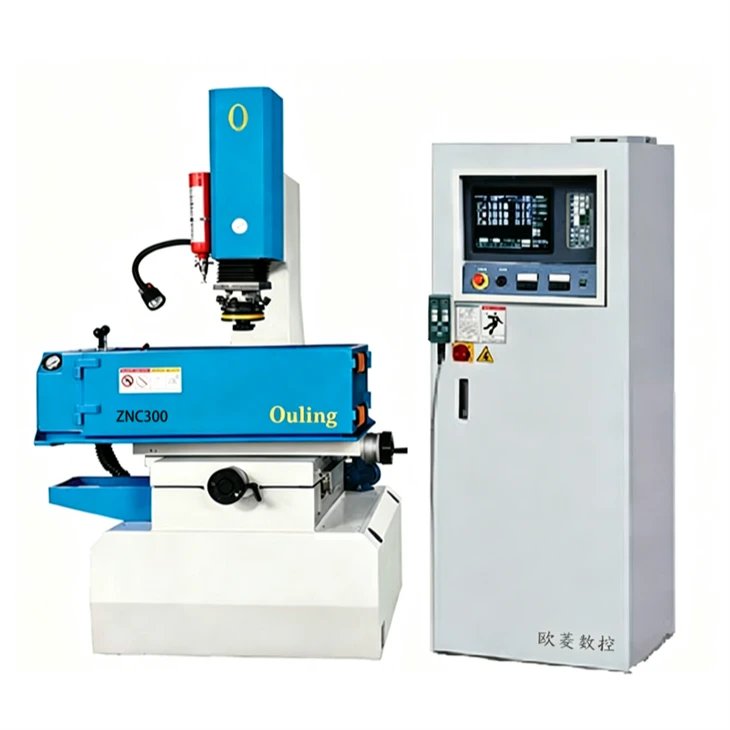
Next, calibrate the axis positioning. ZNC machines use stepper or servo motors to control electrode travel, and misalignment here will throw off every part’s dimensions. Our service technicians test linear axes to ensure they have positional accuracy within ±0.0005 inches over a 12-inch travel distance. For example, the ZNC300 Die Sinker EDM Machine, built for small, high-precision parts, requires stricter calibration than larger models, since its smaller work envelope leaves no room for error. We also verify the dielectric fluid level and conductivity during initial setup—poor dielectric maintenance is one of the top causes of unstable sparking, so getting this right from day one prevents headaches later.
Proactive Maintenance: The Key to Avoiding Unexpected Downtime
I’ve seen shops wait until a machine stops running to fix it, which almost always leads to longer repairs and higher costs. For ZNC die sinker EDM, a structured maintenance schedule based on run time is far more effective than reactive fixes. We categorize maintenance into daily, weekly, monthly, and quarterly tasks to fit most production schedules.
Daily Tasks (10 Minutes Before Starting Production)
These small checks keep minor issues from becoming major problems. First, inspect the dielectric fluid level and clarity: cloudy or contaminated fluid will cause arcing and poor surface finishes. Top off with deionized water or EDM-specific dielectric fluid as needed, and check for debris in the work tank. Next, verify the electrode holder and workholding: a loose holder will shift during cutting, leading to dimensional drift. Tighten all connections and confirm the electrode is seated firmly. For the ZNC450 Die Sinker EDM Machine, which is popular for medium-sized mold components, this daily check catches loose electrode clamps that would cause part rejections later.
Weekly and Monthly Tasks (30–60 Minutes)
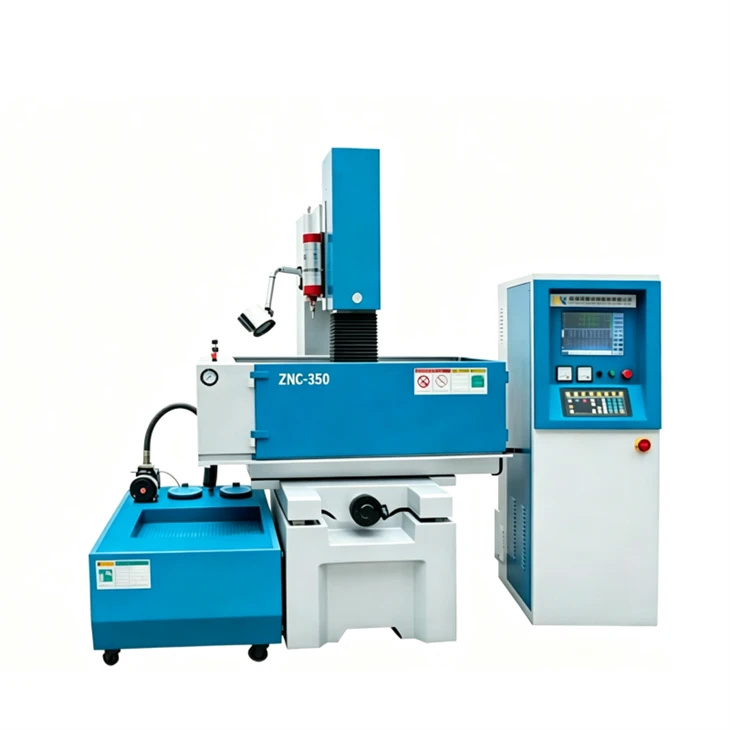
Each week, clean the dielectric filter to prevent clogged lines. A clogged filter restricts fluid flow, leading to uneven spark gaps and inconsistent cutting speeds. For most ZNC machines, the filter is located near the fluid reservoir, and a quick rinse with distilled water removes fine metal chips that accumulate over time. Monthly, test the spark generator and power supply. Unstable power output is a leading cause of poor surface finish and increased electrode wear. We use a digital oscilloscope to check that the pulse frequency and amperage match the machine’s specifications—for example, heavy-duty models like the ZNC550 Heavy Duty ZNC Die Sinker EDM Machine run higher amperage, so their power supplies require more frequent checks to avoid overheating.
Quarterly tasks include inspecting the axis guide rails and lubrication system. ZNC machines rely on linear guide rails for smooth movement, and dry or dirty rails cause friction, leading to axis drift. Apply EDM-specific way oil to the rails, and clean away any metal chips or dust with a lint-free cloth. For the ZNC350 Die Sinker EDM Machine, designed for small, intricate parts, the rails are smaller and more sensitive, so a quick cleaning prevents premature wear that would affect precision.
Optimize Process Parameters for Your Workpiece Material
Even a well-maintained ZNC machine will underperform if you use the wrong process parameters. Reliability here means matching settings to your workpiece material, electrode material, and desired surface finish. The biggest mistake shops make is using generic settings for all jobs, which leads to excessive electrode wear, poor dimensional accuracy, and machine stress.
First, match pulse on-time and pulse off-time to your material. For soft materials like aluminum or copper, a longer pulse on-time (10–20 microseconds) and shorter pulse off-time removes material faster without excessive arcing. For hard materials like tool steel or carbide, a shorter pulse on-time (2–5 microseconds) and longer pulse off-time flushes away chips from the spark gap, preventing short circuits. The ZNC’s automatic control (a standard feature on most modern models) adjusts these settings, but you still need to input the correct material type for the best results.
Another critical parameter is flushing pressure. Poor flushing is the top cause of short circuits and inconsistent cutting. For deep cavities, use a higher flushing pressure (10–20 psi) to force dielectric fluid into the gap, while shallow surfaces need lower pressure to avoid dislodging the electrode. We train all our customers to test flushing with a trial cut on a scrap part, adjusting pressure until sparking is consistent without excessive chip buildup. Over time, improper flushing can damage the machine’s dielectric pump, leading to costly repairs—get this right, and you’ll extend the life of your machine’s hydraulic system by years.
Train Your Operators to Spot Red Flags
A machine is only as reliable as the people running it. Many reliability issues are caused by operator error: using the wrong electrode material, misloading a workpiece, or ignoring small warning signs like unusual noise or uneven sparking. We offer on-site operator training for all our ZNC die sinker EDM machines, and the core focus is teaching teams to recognize red flags before they become problems.
For example, a faint, high-pitched whine from the axis motors can indicate dry rails or misalignment—catching this during a shift change instead of waiting for the machine to shut down saves 4+ hours of downtime. Operators should also inspect every electrode before loading: a bent electrode will cause uneven sparking, and using it will waste material and damage the workpiece. For complex jobs, we recommend that operators run a 0.1-inch trial cut on a scrap part first, verifying dimensions before cutting the final workpiece. This small step prevents 90% of dimensional errors that come from misaligned electrodes.
Partner With a Supplier That Prioritizes Long-Term Reliability
At the end of the day, your ZNC die sinker EDM’s reliability depends on the support behind it. When we design and build our ZNC models, we use durable, industrial-grade components for heavy-duty use, but even the best machines need access to genuine parts and timely service. Our team works closely with customers to create custom maintenance plans, offers 24/7 technical support for urgent issues, and provides free parameter updates to optimize performance for new materials.
If you’re in the market for a ZNC die sinker EDM, we encourage you to look beyond initial price. Our range includes machines for every need: compact, high-precision models like the ZNC300 Die Sinker EDM Machine for small medical components, large-capacity models like the ZNC650 Large ZNC Die Sinker EDM for automotive molds, and heavy-duty models like the ZNC550 Heavy Duty ZNC Die Sinker EDM Machine for deep die cavities. Each machine is built with the same focus on reliability, so you can choose the right model for your production volume and requirements.
If you’re looking to upgrade your current ZNC die sinker EDM, troubleshoot persistent reliability issues, or explore models tailored to your shop’s needs, reach out to our team to discuss your requirements. We’ll work with you to identify the best solution and provide ongoing support to keep your operations running smoothly.
References
- EDM Handbook: Fundamentals and Applications. Society of Manufacturing Engineers, 2021.
- "Maintaining Die Sinker EDM Equipment for Maximum Uptime." Manufacturing Engineering Magazine, vol. 168, no. 3, 2022, pp. 45–52.
- "ZNC EDM Performance Optimization: Parameter Adjustment Guide." International Journal of Precision Engineering and Manufacturing, vol. 23, no. 7, 2022, pp. 819–831.
- CNC Machine Reliability: A Guide for Shop Managers. American Machine Tools Association, 2020.
- Die Sinker EDM Maintenance Best Practices: Field Data Analysis. Global EDM Solutions, 2023.