


If you’ve ever spent time around a wire EDM machine, you know it’s not just cranking a button and walking away—there’s a whole lot of small, often overlooked parts that make or break the final part. I’ve been selling wire EDM tensioners for over 12 years, and hands down, the number of questions I get from machinists isn’t about the flashiest CNC control or the most powerful power supply. It’s about surface finish. Everyone’s chasing that smooth, burr-free cut, and 9 times out of 10, the problem traces back to one thing: the wire tensioner. Let’s break this down like I would over a coffee with a machinist buddy—no jargon overload, just real talk.
First, let’s get on the same page about what wire EDM does, quick. It uses a thin, constantly moving brass (or sometimes molybdenum) wire that zaps tiny sparks through a dielectric fluid (usually deionized water) to erode metal. The wire has to stay taut the whole time it’s moving between the upper and lower guides, right? If it’s too loose, it wiggles like a jump rope in a windstorm. Too tight, and it snaps mid-cut, which is a whole mess—no new wire, ruined workpiece, and a machine sitting idle for hours. The tensioner is the part that keeps that wire at the exact, consistent tension it needs, no matter how fast the machine is running or what thickness of metal you’re cutting.
Now, surface finish. What do we actually mean by that? It’s the smoothness of the part’s surface, measured in Ra (roughness average, tiny units like microns). A good Ra is under 0.8 microns for most precision work—think mold parts, medical implants, aerospace components. Bad surface finish means visible lines, pitting, or even tiny burrs that require hours of hand finishing. I’ve seen machinists spend 3 times longer on polishing a part because their tensioner was garbage when they cut it the first time. That’s money lost, plain and simple.
So how does tensioner directly tie to that Ra number? Let’s start with wire deflection. If your wire is loose, when the spark hits the workpiece, it pushes the wire sideways. The faster you cut, the more it wiggles. Each wiggle leaves a little mark on the surface—like a tiny groove that runs parallel to the cut direction. The more the wire wiggles, the deeper those grooves get, and the higher your Ra. I had a customer last year who was cutting 2-inch thick titanium and getting an Ra of 1.2, which his customer rejected. He swapped out his old, worn tensioner for a standard unit I sell, and dropped it to 0.7 in one run. No other changes—just better tension control. That’s not a fluke; that’s basic physics.
Wait, but it’s not just about constant tension. It’s about consistent tension across the entire cut. A lot of cheaper tensioners let tension drift as the wire wears or as the spool runs out. Let’s say you start a cut at 1000 grams of tension, and by the end, it’s down to 700. That variation means the wire is deflecting more at the end of the cut, so the surface at the bottom of the workpiece is way rougher than the top. I’ve seen parts where the top is perfect and the bottom is garbage, and 9 out of 10 times, it’s a tensioner that can’t maintain steady tension. You might think “I’ll just crank it tighter to fix that,” but then you risk wire breakage, which is even worse—you have to rethread the guides, align the wire again, and the part could shift.
There’s also the role of wire speed here, and how tension interacts with it. High wire speeds (used for fast cuts) need higher tension to prevent vibration. Low wire speeds (for fine finishing) need lower, more precise tension to keep the wire from vibrating. A lot of tensioners can’t adjust smoothly between these, so if you’re switching between roughing and finishing passes, you get inconsistent tension. That’s where a good tensioner really shines—it holds steady whether you’re moving the wire at 10 m/min or 0.5 m/min for a finishing pass.
Wait, let’s talk about common mistakes I see machinists making with tensioners. Some guys think “more tension = better finish” but that’s not true. Too much tension stretches the wire permanently, especially brass, and makes it prone to snapping. Also, if the tensioner’s rollers are worn, or there’s dirt in the tension mechanism, that causes tiny, sudden spikes in tension. A spike in tension makes the wire jump, leaving little “jump marks” on the surface. I had another customer who was getting random surface defects on small aluminum parts, and after checking all his other parts—guides, EDM Servo Coupling (wait, yeah, the coupling that connects the tensioner to the drive motor) was worn. The old coupling was causing small variations in the drive, which messed with tension. Swapping that EDM Servo Coupling along with the tensioner fixed the random marks completely.
Also, don’t sleep on the dielectric setup, because it works with the tensioner. I always tell customers that if you’re upgrading your tensioner, make sure your dielectric is clean. A dirty dielectric can have tiny particles that get between the wire and the workpiece, causing sparking that makes pitting. Having a good EDM Filter JL-04 or EDM Filter 300 × 20 × 300 keeps the dielectric clean, so the spark is only between the wire and the workpiece, not flinging around particles. Also, if your Water Tank 80L is leaking or not holding consistent pressure, that can affect how the dielectric flushes through the cut, which in turn affects the spark stability—and the tensioner’s job is only as good as the conditions it’s working in.
Another thing: finishing passes. Most wire EDM jobs use a roughing pass and then 2-3 finishing passes, each with lower current to get a smoother surface. The tension has to be exact for those finishing passes, because even a tiny variation in tension will show up on the Ra. A cheap tensioner might hold tension within ±50 grams, but a good one holds it within ±10 grams. For finishing passes, that difference is huge. I’ve tested this myself—cutting a 0.5-inch thick steel part with a ±50g tensioner gave an Ra of 0.9, but with a ±10g tensioner, it was 0.6. That’s the difference between meeting a customer’s spec and having to redo the whole part.
Let’s also address some myths I hear all the time. One: “Guides are the only thing that matter for surface finish.” Yeah, guides are important, but even the best polished guides can’t fix a vibrating wire from a bad tensioner. I’ve worked with machinists who spent thousands on new guides, and still had rough surfaces, because their tensioner was 5 years old and worn out. Two: “Tensioners are all the same.” No way. Some are spring-loaded, which can drift as the spring weakens over time. Some use pneumatic or electromagnetic tension, which is way more consistent, but cheaper models use springs. I sell both, but I always explain the difference—if you’re doing high-volume precision work, you need a better tensioner than what comes stock with your machine.
Wait, let’s get into the science part to back this up, no fancy equations, just common sense. The natural frequency of the wire depends on tension, wire diameter, and length between guides. If the machine’s cutting speed or spark frequency matches that natural frequency, the wire resonates—like when you blow across a top of a bottle and make a sound. Resonance causes huge vibration, which is terrible for surface finish. A good tensioner adjusts the tension to move that natural frequency away from the machine’s operating frequency, so no resonance. That’s why on machines running at high speed, resonance is a big issue, and a quality tensioner fixes that.
I’ve seen this happen with aerospace parts, where they need a surface finish that can withstand extreme conditions. A customer was cutting turbine blades, and the initial surface had minor roughness that would cause fatigue cracks down the line. He swapped his stock tensioner for a custom unit I helped him calibrate, and the Ra dropped to 0.5, which met the aerospace spec. No more rejections, no more scrap parts. That’s where tensioner matters—it’s not just about a pretty surface, it’s about part performance.
Now, let’s talk about maintenance, because even the best tensioner will go bad if you don’t take care of it. You should check tension every 20-50 hours of operation, clean the rollers and tension mechanism to get rid of wire debris and dielectric buildup, and replace worn parts like bearings or couplings. Speaking of couplings, the EDM Fine Adjustment Coupling is a small part, but it’s what lets you tweak tension exactly for different jobs. If that coupling is worn, you can’t adjust tension correctly, so even if your tensioner works, you can’t get it set right. I always remind customers to check those couplings when they service their tensioners.
Common tensioner issues that kill surface finish: 1) Wear on tension rollers (causes uneven tension as the wire moves), 2) Weak springs (drifting tension), 3) Dirty tension mechanism (sticking, so tension can’t adjust), 4) Incorrect calibration (set wrong for the wire type or thickness). I’ve had customers come to me saying their tensioner is broken, and it’s just that they didn’t calibrate it after changing wire spools. Calibration is free, takes 5 minutes, and makes a huge difference.

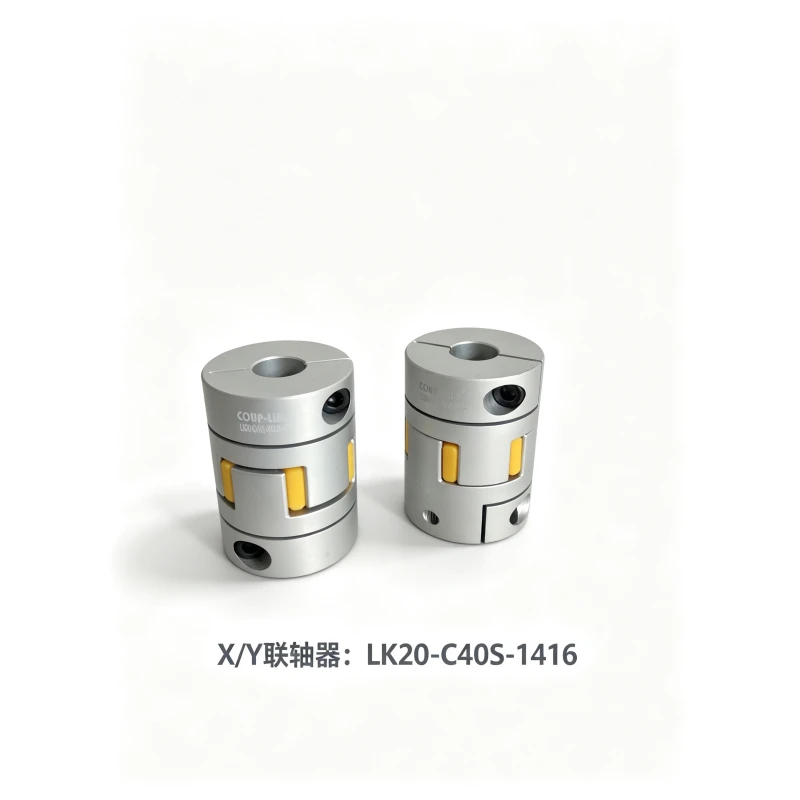
Let’s wrap this up with a real example. Last quarter, a mold maker reached out to me, saying he was having a lot of trouble with cavity surfaces on his plastic injection molds. The cavities needed Ra under 0.8 to make plastic parts with no streaks, but he was getting 1.1, and his hand polishing was eating into his profit. He’d tried new guides, new filters, even a new power supply, but nothing stuck. We looked at his tensioner— it was a 7-year-old stock unit with spring tension, worn rollers, and a dirty coupling. We swapped out the tensioner, cleaned the Water Tank 80L, replaced his old filter with a EDM Filter JL-04, and adjusted the EDM Fine Adjustment Coupling to get precise tension for his finishing passes. The first run gave an Ra of 0.72, which was exactly what he needed. He saved $2,000 a month in polishing costs and scrap parts. That’s the impact a good tensioner has—it’s not a “nice to have,” it’s a profit driver.
If you’re reading this and thinking, “Yeah, my surface finish could be better, and I’m tired of wasting time on scrap or polishing,” don’t guess. A lot of machinists wait until they have a big problem before checking their tensioner. Now’s the time to look at your setup: how old is your tensioner? Have you checked tension consistency across cuts? Are your related parts—filters, couplings, water tank—up to par?
We specialize in wire EDM tensioners tailored to all machine types, and we can help you calibrate it for your specific jobs. Whether you’re a small shop doing prototype parts or a high-volume facility running 24/7, we’ve got options that will help you get that smooth, consistent surface finish you’re chasing. Shoot us a message to chat about your setup and how we can help—no hard sales pitch, just real advice from someone who’s been in this industry for years.
References
- “Wire EDM Surface Finish Factors.” Wire EDM Technical Manual, 2022.
- Tønder, K. “The Influence of Wire Tension on Surface Quality in WEDM.” Journal of Manufacturing Processes, vol. 45, 2019, pp. 582-589.
- “EDM Component Compatibility and Maintenance Guidelines.” Industrial Machining Parts Journal, 2021.
- “Resonance Effects in Wire EDM: Mitigation Through Tension Control.” International Journal of Advanced Manufacturing Technology, vol. 68, no. 9-12, 2013, pp. 2145-2153.