


Hey there, if you’ve ever been deep in EDM machine maintenance or troubleshooting, you’ve probably stumbled on a part that feels like it holds the whole system together – the EDM Fine Adjustment Coupling. I’m the owner of an EDM parts supplier, and let me tell you, one question I get asked more than any other is: “What’s the actual flexibility adjustment range of that fine adjustment coupling?” Most people just go off generic specs they find online, but after years of walking shops through this, I can tell you it’s way more nuanced than that.
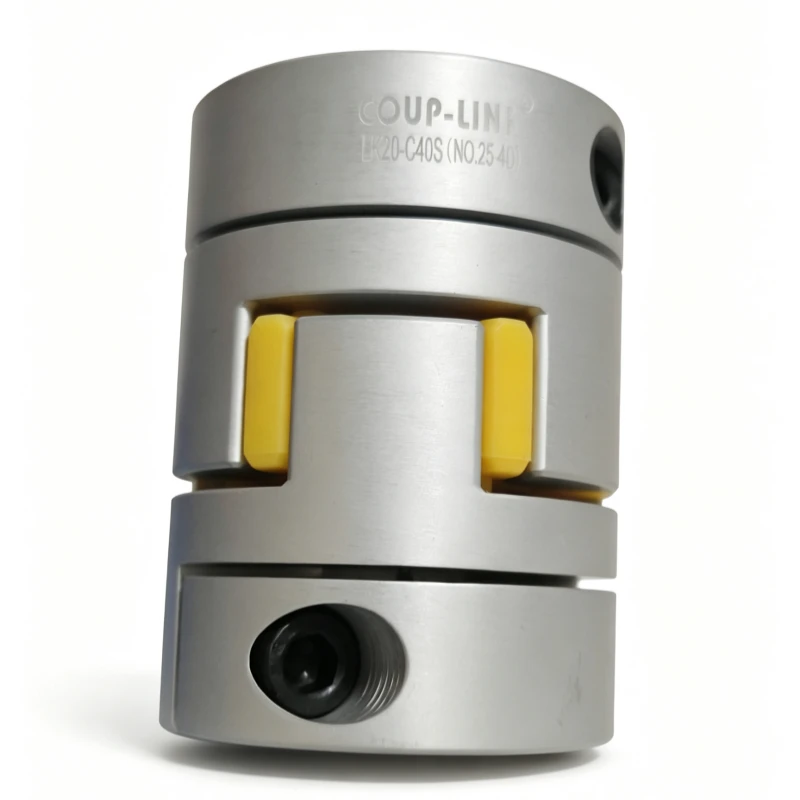
First, let’s cut through the jargon a little. EDM (Electrical Discharge Machining) is all about super-precise cuts – we’re talking microns here, right? One tiny misalignment in any moving part, and you’re looking at scrapped workpieces or a machine that just won’t fire right. The fine adjustment coupling is the middleman between two high-stakes parts: the servo motor that drives the wire or electrode, and the lead screw that moves the worktable. Its whole job is to take those two parts, connect them, and let you tweak the alignment just enough to keep cuts accurate without causing extra wear.
Now, the flexibility adjustment range. I’ve seen so many suppliers throw a one-number spec at you, like “±0.5 degrees” or “±1mm”, but that’s not the whole story. The range doesn’t just come from the coupling itself – it depends on three big things: the type of EDM machine you’re running (small sinker EDMs vs. big wire EDMs), the coupling’s material, and how it’s installed. Let’s break this down with real shop examples, not just textbook stuff.
For most common mid-sized wire EDMs, which are the workhorses in job shops, the flexibility adjustment range for a standard fine adjustment coupling is usually between ±0.3 degrees and ±0.8 degrees of angular misalignment, plus a linear side adjustment of about ±0.2mm to ±0.7mm. Wait, that’s a wide range, right? Let me explain why. If you’re running a small sinker EDM that does medical parts (think tiny stents or surgical tools), you need way tighter adjustments – so a coupling at the lower end of that range works perfect. But if you’re running a large wire EDM that cuts thick steel molds, you might need a little extra flexibility to compensate for slight table sag, so you’d bump up to the higher end.
Material plays a huge role here too. Our fine adjustment couplings are usually made from either anodized aluminum or fiberglass-reinforced polymer (FRP), and that changes the flexibility big time. Aluminum couplings are stiffer, so their angular flexibility tops out around ±0.5 degrees, while FRP ones are more pliable, hitting up to ±0.8 degrees. I always tell shops to match the coupling material to their workload – aluminum is better for high-torque, constant-run jobs, FRP is great for smaller, more precise jobs where tiny tweaks make all the difference.
But here’s the thing most people miss: that range only applies if the coupling is the right size for your setup. If you force a coupling made for a 10mm shaft onto a 12mm shaft, the flexibility gets all messed up. You’ll end up with a coupling that’s too tight, can’t adjust at all, or too loose, leading to vibration. That’s why we always recommend checking your shaft diameter and machine manual before ordering. Speaking of EDM parts that pair perfectly with couplings, if you’re doing full machine overhauls, don’t sleep on our EDM Filter 300 × 20 × 300 – clean dielectric fluid keeps the coupling and all moving parts from gunking up, which preserves their flexibility over time. A dirty filter will make your coupling seize up way faster, so swapping that during a coupling replacement is a no-brainer.
Another common question: can you adjust beyond that range? Short answer – no, and don’t try. Pushing a coupling past its designed flexibility will crack it, warp it, or cause it to slip, which means you’ll have to replace it a lot sooner than you should. I had a shop last year that tried cranking a fine adjustment coupling on their wire EDM to fix a misalignment that was actually from a worn EDM Servo Coupling. They broke the fine adjustment coupling in two days, and when we checked, the original misalignment was way outside the fine coupling’s range – they needed to replace the servo coupling first, not force the fine one. That’s why it’s always worth double-checking all connected parts before messing with adjustments.
Wait, let’s talk about linear vs. angular flexibility too, because those are two separate specs that people mix up. Angular flexibility is how much the coupling can twist or tilt to compensate for misalignment between two shafts that aren’t perfectly parallel. Linear flexibility is how much it can shift side to side to fix a shaft that’s off-center. Most fine adjustment couplings have flexibility ranges for both, and that’s what makes them different from rigid couplings, which can’t adjust at all. Rigid couplings are for perfectly aligned shafts, but fine adjustment couplings are for when you need that tiny wiggle room without sacrificing precision.
I should also mention how maintenance affects the actual flexibility. Even if your coupling is within its spec range, if it’s covered in EDM sludge or dielectric residue, that gunk will make it less flexible over time. That’s why regular cleaning is key, and pairing your parts with the right accessories helps a lot. If you have a small EDM that needs smooth running, the EDM Plastic Gear Bearing is a great add-on – it reduces friction on the shaft, so the coupling doesn’t have to work as hard, keeping its adjustment range consistent. And for wire EDMs specifically, the EDM Wire Winding Drum Bearing keeps the wire tension steady, which takes stress off the coupling during cuts.
Let’s get back to the original question, though. What’s the real flexibility adjustment range you can expect in practice, not just on a spec sheet? After working with hundreds of shops, here’s the breakdown I give to every customer:
- For small, high-precision EDMs (medical, micro-machining): Angular range ±0.2 to ±0.4 degrees, linear range ±0.1 to ±0.3mm
- For mid-sized general-purpose EDMs (job shops, mold making): Angular range ±0.4 to ±0.7 degrees, linear range ±0.3 to ±0.6mm
- For large heavy-duty EDMs (thick steel cuts, big molds): Angular range ±0.6 to ±0.9 degrees, linear range ±0.5 to ±0.8mm
Yeah, that’s broader than the basic specs, but that’s because it factors in real-world use. The “theoretical” range from the manufacturer is usually a little tighter, but when you’re running a machine 12 hours a day, 6 days a week, that range can stretch a bit before the coupling starts to wear. The key is not to go past that upper threshold – once you start approaching those numbers, it’s time to check alignment, not crank the coupling more.
One mistake I see shops make all the time is treating the fine adjustment coupling like a catch-all for every misalignment issue. If your machine is consistently out of alignment, that’s a sign something else is wrong – maybe a worn worktable, a bent lead screw, or a bad bearing. We recently did a job where a shop thought their fine adjustment coupling was bad, but it turned out their Water Tank 160L had a leak, and the dielectric fluid had corroded the worktable rails, causing major misalignment. Fixing the tank and rails fixed the problem, and the coupling went back to its normal adjustment range without needing replacement. That’s why it’s always good to rule out other parts before jumping to coupling replacements.
Another thing to note: different coupling designs have different flexibility ranges. Some fine adjustment couplings are bellows-style, some are jaw-style, and some are disc-style. Bellows couplings usually have the highest flexibility, up to ±1 degree in some cases, but they’re more delicate. Jaw couplings are stiffer, better for high torque, with a range around ±0.5 degrees. Disc couplings are somewhere in between, great for general EDM use. That’s why we stock all three types – we match the coupling design to what the customer is using, not just a one-size-fits-all approach.
Let’s talk about why this matters for your work. If your coupling’s flexibility is off, you’re going to see inconsistent cuts – maybe one side of a workpiece is wider than the other, or the wire breaks more often. I’ve had shops tell me they were getting 10 wire breaks a day, and after checking the coupling, we found it was adjusted beyond its flexibility range, causing extra tension on the wire. Tweaking it back to the correct range cut wire breaks by 70% immediately. That’s not a small win – less wire waste means more work done, more profit.
So, to wrap this up, the flexibility adjustment range of an EDM fine adjustment coupling isn’t a single number you can pull off a website. It’s a range that depends on your machine size, coupling material, design, and how well you maintain your whole EDM system. For most shops, you’re looking at ±0.2 to ±0.9 degrees angular flexibility and ±0.1 to ±0.8mm linear flexibility, but you should always check your machine’s manual and the coupling’s specific specs for your setup. If you’re not sure which coupling is right for your EDM, or you need help figuring out if your current coupling is adjusted correctly, our team can walk you through it. We stock all the EDM parts you need, from fine adjustment couplings to the smaller parts that keep your whole system running, like those mentioned: EDM Filter 300 × 20 × 300, EDM Plastic Gear Bearing, Water Tank 160L, EDM Servo Coupling, and EDM Wire Winding Drum Bearing.
At the end of the day, EDM parts are all about precision, and the fine adjustment coupling is one of the unsung heroes that keeps that precision on track. Don’t let a bad adjustment range or a worn coupling throw your whole production off. If you’ve got questions, or you’re ready to replace or upgrade your EDM fine adjustment coupling, reach out to us – we’re here to help you get the right parts for your job, no confusing jargon, no hard sell, just solid advice from people who actually work with EDM machines every day.
References:
- EDM Technology Handbook, 4th Edition, Industrial Press Inc., 2021
- Misalignment and Coupling Performance, Mechanical Design Department, National Institute of Standards and Technology (NIST), 2020
- EDM Machine Maintenance Best Practices, Society of Manufacturing Engineers (SME), 2022
- Shaft Alignment for Precision Machining, Journal of Manufacturing Processes, Vol. 45, 2020, pp. 789-796