


Hey there, fellow manufacturing and EDM drill folks! Let’s cut through the jargon for a sec—if you’ve ever stood in front of a multi-electrode drill EDM machine, staring at that sleek, rotating rack of tiny copper or tungsten electrodes, you might’ve thought, “Wait, what’s that thing even do?” Spoiler: it’s not just a fancy storage shelf. As someone who’s been selling drill EDM machines for over a decade, I’ve seen way too many shops skip past the tool magazine as just another part, then waste hours fumbling with single electrodes mid-run. Today, let’s break down exactly why the tool magazine is the unsung hero of multi-electrode drill EDM, no boring textbook stuff—just real shop floor tea, plus some of our own machines that nail this part.
First, let’s get on the same page: a multi-electrode drill EDM isn’t your basic hole-puncher. It uses electrical discharge, not physical cutting, to drill super small, deep, or precise holes in stuff like aerospace turbine blades, medical implants, or fuel injection nozzles—think holes as tiny as a human hair, 10x deeper than they are wide. These jobs aren’t one-and-done; sometimes you need 5, 10, even 20 different electrode sizes or geometries for a single part. If you’re swapping electrodes by hand every time, you’re wasting way more time than you think (not to mention risking broken electrodes or operator error). That’s where the tool magazine steps in. Its main gig? Automatically storing, retrieving, and swapping electrodes mid-cycle so the machine never has to stop waiting for a human. But there’s way more to it than just holding parts.
Let’s start with the big one: uptime and consistency, which are make-or-break for any shop. I once talked to a guy running a 2018 drill EDM without a proper tool magazine—he’d have to pause every 15 minutes to swap a 0.2mm copper electrode out for a 0.15mm one, and on a 40-hole turbine blade, that added up to 2 hours of downtime per part. With our CNC3545 EDM Drilling Machine, we paired it with a 12-station tool magazine (you can check it out here if you want the deets) that swaps electrodes in under 10 seconds. No more operator hovering, no more “wait, where’d I put that tiny electrode?” panic. Even better, every swap is precise—within 0.001mm repeatability—so the hole size doesn’t drift between electrodes. That’s huge for jobs where even a 0.005mm error means scrapping a $5,000 part.
Wait, not all tool magazines are made equal, right? Some budget machines have a tiny 6-station rack that only holds 2 sizes, forcing you to run multiple machines for a single job. That’s a killer for small shops with limited floor space. Our CNC4565 EDM Drilling Machine, for example, has an upgraded 18-station tool magazine (link here) that handles everything from micro-electrodes to longer 150mm ones for deep-hole drilling. We designed it so it doesn’t waste space—instead of a bulky vertical rack, it’s a compact rotating carousel that fits right by the machine’s work area, so you don’t have to walk 10 feet to get an electrode. For shops that do high-mix, low-volume work (like medical device prototyping), that flexibility is non-negotiable.
Another role most people miss: protecting expensive electrodes. Let’s be real, a single 0.1mm tungsten electrode costs $20-$30, and if it bends or gets scratched, it’s garbage. A tool magazine isn’t just a holder—its slots are lined with soft, non-marring inserts that cradle electrodes so they don’t bang into each other when the carousel spins. I’ve had customers bring in bent electrodes from another machine’s rough, unlined magazine, and when they switched to our DB703 EDM Drilling Machine, which has a 16-station lined tool magazine (link here), their electrode breakage dropped by 40% in the first month. That adds up to thousands in savings a year, not to mention less downtime from replacing broken electrodes mid-job.
And for shops that do super high-volume, like automotive fuel injector mass production? The tool magazine also handles electrode management software. Our DB703A EDM Drilling Machine (link here) pairs its 20-station tool magazine with our built-in CAM software that tracks every electrode’s usage, wear, and lifespan. If an electrode is getting too worn to drill accurate holes, the machine automatically swaps in a new one from the magazine, no input needed. A few months back, a customer in Detroit was running 100k fuel injector nozzles a month—without the smart magazine, they were checking every 500 holes for wear, but with the DB703A, they only do a weekly calibration. That’s 8+ hours a week of operator time they can spend on other jobs, not babysitting the machine.
Wait, let’s talk about when tool magazines go wrong, because that’s where a lot of shops mess up. I once had a shop call us panicking because their old machine’s magazine would jam every time a thicker electrode was loaded—turns out, it was sized for tiny micro-electrodes, so a 1mm electrode wouldn’t fit right. That’s why matching the magazine capacity and size to your typical job is key. If you mostly do micro-holes under 0.5mm, a small 8-12 station is fine, but if you’re drilling turbine blade cooling holes that need longer, thicker electrodes, you need a magazine that can accommodate those dimensions without compromise. All our machines’ magazines are customizable, too—if you need extra slots for a specific job, we can adjust the setup on the fly, no big overhaul.
Let me wrap this up with a real example that stuck with me. Last year, a customer in the aerospace sector came to us with a problem: they were running 10 different turbine blade cores, each needing 8-12 unique electrodes, and their old process took 12 hours per core, mostly from manual electrode swaps. We paired them with our CNC3545, which has a 12-station tool magazine, and optimized their programming to pull the right electrodes automatically. Within 3 months, their core run time dropped to 5.5 hours, and their scrap rate went from 8% to 2% because the electrode swaps were so precise. They ended up adding our CNC4565 for their next line, too—they said the tool magazine alone paid for the machine in 6 months from saved labor and material.
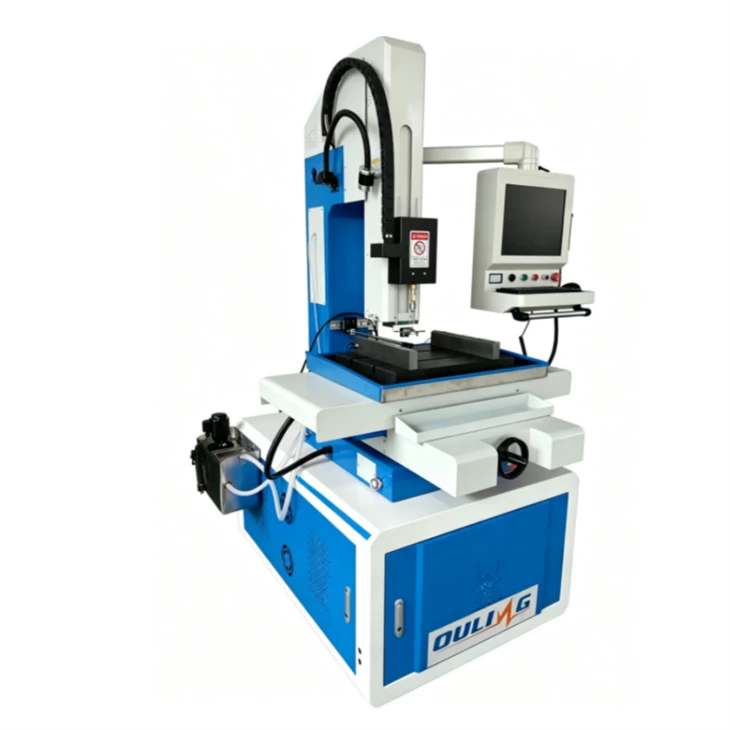
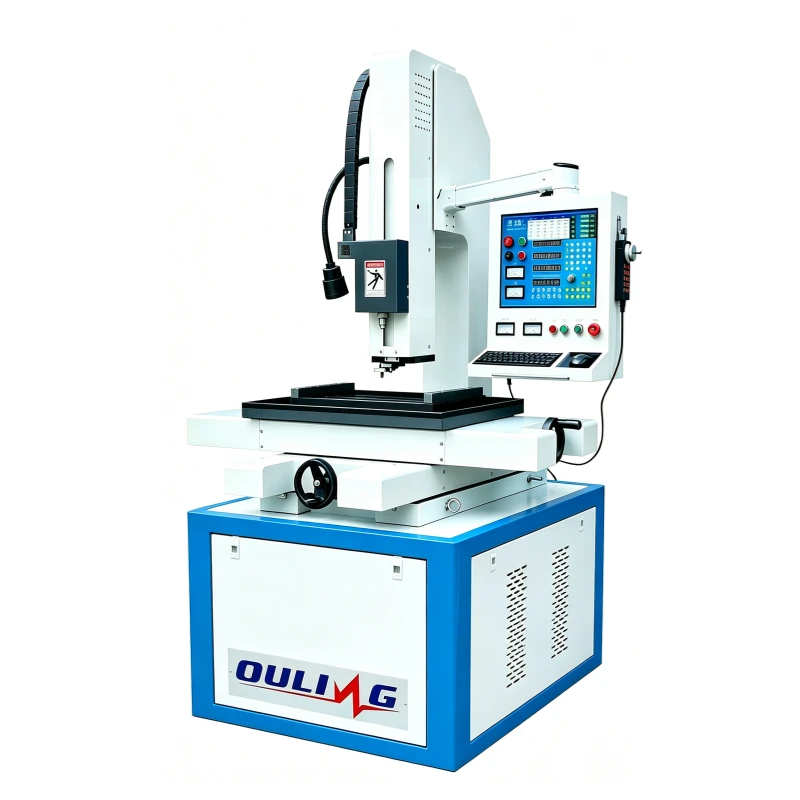
At the end of the day, the tool magazine isn’t an afterthought on a multi-electrode drill EDM—it’s the backbone of efficiency, consistency, and cost-savings. It’s the reason you don’t have to watch a machine idle while an operator rummages for an electrode, the reason your holes are uniform every time, and the reason you don’t waste money on broken, damaged electrodes. If you’re shopping around for a drill EDM and only looking at spindle speed or hole size? You’re missing half the picture. The tool magazine is where a good machine becomes a game-changer for your shop.
If you’re ready to upgrade your drilling process or just want to chat about how our machines’ tool magazines can fit your specific jobs, reach out to our team to connect. We’re here to help you figure out what setup works best, no sales pitch pressure—just real advice from folks who’ve been in your shoes.
References
- EDM Today. (2022). “The Evolution of Tool Handling in Multi-Electrode Drill EDM.” Industrial Manufacturing Journal.
- Manufacturing Engineering Society International Conference (MESIC). (2021). “Precision Tool Management for Micro-EDM Processes.” Procedia Manufacturing.
- Aerospace Manufacturing and Design. (2023). “Key Components Driving EDM Efficiency for Turbine Blade Production.” Tech Briefs Media Group.