


When I first started working as a Wire EDM Wire Feed Motor supplier, I got used to fielding the same question from customers, new and old alike: “What’s the power rating of a typical Wire EDM wire feed motor?” It’s a deceptively simple question, but anyone who’s spent time around Wire Electrical Discharge Machining (Wire EDM) knows there’s no one-size-fits-all answer. The motor isn’t just a part—it’s the quiet workhorse that keeps the thin, fragile wire moving at the exact speed and tension needed to cut complex metal parts with micron-level precision. Get that power wrong, and you’ll wind up with broken wire, uneven cuts, or even damaged workpieces.
Let’s start by grounding this in what a Wire EDM wire feed motor actually does. Unlike a standard motor that drives a pump or a fan, this motor has two non-negotiable jobs: it advances the brass or molybdenum wire steadily through the machining zone, and it maintains consistent tension on that wire to prevent flutter or slippage. That means its power rating depends entirely on the machine it’s paired with, the type of work it’s doing, and the environment it operates in.
Most conventional Wire EDM systems—think of the mid-sized machines commonly used in toolrooms, prototype shops, and small to medium manufacturing facilities—run with wire feed motors in the 50 to 200 Watt (0.067 to 0.268 Horsepower, or HP) range. That might sound low, but it’s perfectly suited for their workload. A 100 Watt motor, for example, is enough to move a thin 0.2mm brass wire at speeds up to 15 meters per minute, while keeping tension steady even when the wire passes through the machine’s guides and the dielectric fluid bath. Dielectric fluid is non-negotiable in EDM—it flushes away eroded metal particles, cools the wire, and insulates for the spark. This is where parts like a Water Tank 130L come into play, as the large volume of dielectric fluid it holds helps stabilize operating temperatures, reducing the load on the feed motor by minimizing wire expansion and tension fluctuations as the machine runs for hours on end.
But here’s where the “typical” label gets tricky. If you’re working with a high-precision micro-Wire EDM machine, used for tiny parts like medical implants or electronic connectors, the power rating drops even lower—often to 15 to 50 Watts. These machines use wire as thin as 0.05mm, so the feed motor only needs to overcome the tiny resistance of the wire path, not the drag from a thicker wire or a heavy drum of wire. On the flip side, large-format Wire EDM machines, used for big aerospace parts or heavy industrial tooling, might push that rating up to 300 Watts (0.4 HP) or even more. These machines handle thicker wire (up to 0.3mm) and longer cuts that require maintaining tension across a much longer wire path, so the motor needs extra power to overcome friction and drag over extended run times.
The power rating isn’t just about raw horsepower, though. It’s also about torque, especially low-end torque, which is critical for Wire EDM. A motor with high low-end torque can start moving the wire smoothly without jerking, which prevents wire breakage—a huge pain point for EDM operators. That’s why most standard wire feed motors for Wire EDM are brushed or brushless DC (BLDC) motors, rather than AC motors. DC motors offer precise speed control at low RPM, which is exactly what you need for consistent wire feed. BLDC motors, in particular, are growing in popularity because they’re more efficient, last longer, and require less maintenance than brushed models, making them ideal for shops that run their EDM machines around the clock.
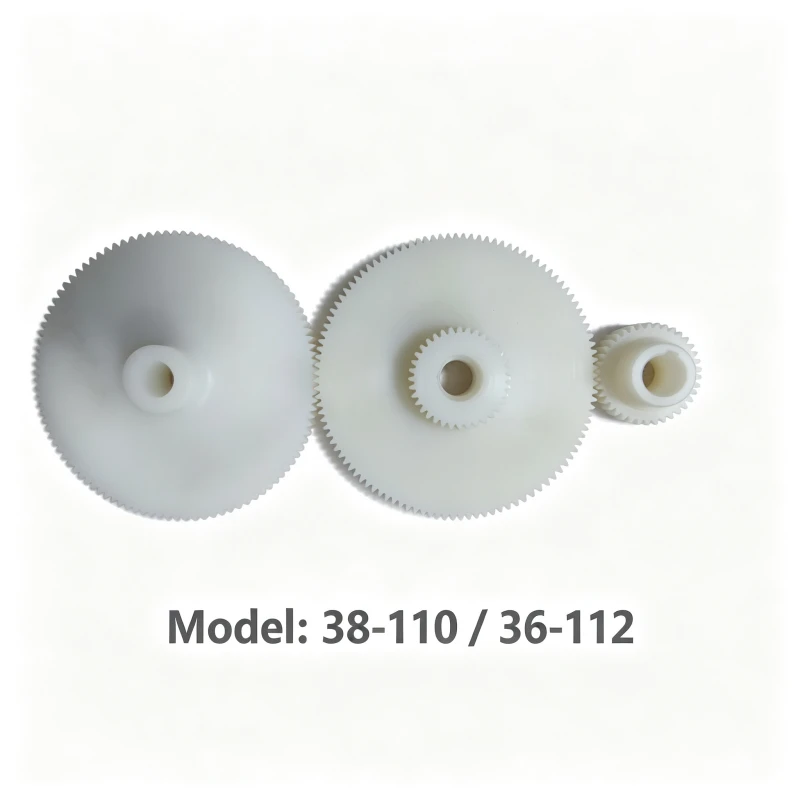
Now, let’s talk about the parts that work hand-in-hand with the feed motor, because they directly impact how much power the motor needs to deliver. Take the EDM Plastic Gear, for example. Gears in the wire feed system transfer power from the motor to the wire drum and the wire guides. If a gear is worn, misaligned, or made of low-quality plastic, it creates extra friction. That means the feed motor has to work harder to turn the gears, drawing more power and increasing wear on all the parts. That’s why we supply high-grade EDM Plastic Gears designed to reduce friction and handle the unique demands of EDM’s dielectric environment—they not only make the motor’s job easier, but also extend the overall lifespan of the feed system.
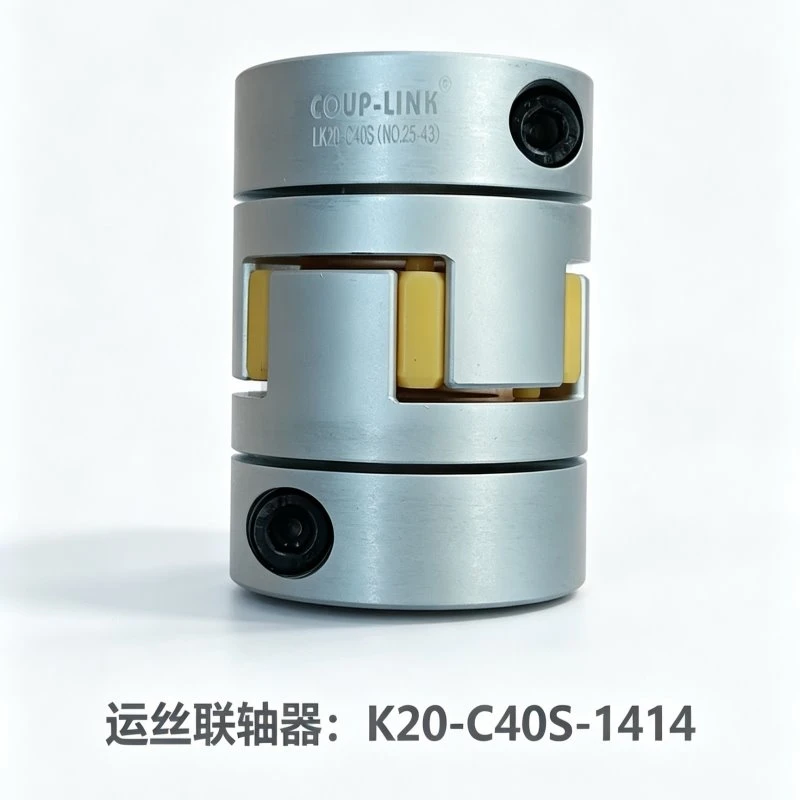
Another key component is the Wire Drum Coupling for EDM. This part connects the motor’s output shaft to the wire drum, which holds the spool of wire. A poorly fitted or worn coupling can cause slippage between the motor and the drum, forcing the motor to compensate by drawing more power to maintain feed speed. Our Wire Drum Couplings are precision-machined to create a tight, slip-free connection, so the motor delivers power exactly where it’s needed—no wasted energy, no extra load. Even small parts like the EDM Plastic Gear Bearing play a role here; these bearings reduce friction as the gears rotate, lowering the strain on the motor and helping it run at its optimal power level.
Operators also often overlook the role of the EDM Proximity Switch, which monitors the position of the wire drum and signals the motor to adjust feed speed if the wire is running out or the drum is close to empty. A misaligned or faulty proximity switch can cause the motor to work unnecessarily hard, as it might overcompensate for incorrect position data. That’s why using a reliable EDM Proximity Switch is critical—it keeps the motor operating at its intended power range, preventing overheating and premature wear.
I’ve seen too many shops try to cut costs by pairing an undersized or oversized motor with their EDM machine, and it almost always leads to problems. An undersized motor will overheat on long cuts, leading to frequent wire breaks and downtime. An oversized motor, on the other hand, wastes energy, runs at inefficient RPM, and can cause sudden jerks in the wire feed that damage delicate parts. For a typical mid-sized Wire EDM machine, the sweet spot is usually between 75 and 150 Watts—this range balances power, efficiency, and precision for most common applications, from tool and die making to general prototype work.
That said, there are variables that can shift this range. If you’re machining conductive materials like titanium or Inconel, which produce more eroded debris, you might need a slightly stronger motor to handle the extra drag from wire guides that need to push through the debris. If your shop runs multiple 10-hour shifts a day, a motor with a bit more power will handle the continuous load better. Conversely, if you’re only doing small, short cuts on soft aluminum, a smaller 50 Watt motor might be more than enough.
When a customer comes to us asking for a wire feed motor replacement, the first thing we don’t do is just sell them a motor with the same power rating as the old one. We ask questions: what type of machine is it? What materials do you cut? How long are your runs? What’s your wire diameter? That’s how we make sure they get a motor that’s perfectly matched to their needs, not just a generic part. For example, a shop with a 5-year-old mid-sized Wire EDM that runs 24/7 on steel tooling might need a 150 Watt motor, while a prototype shop with a micro-Wire EDM for medical parts will need a 30 Watt motor.
Over the years, I’ve also noticed that the trend in Wire EDM is toward higher precision, which means more demand for motors with precise speed and tension control—even if their power rating is on the lower end. Modern EDM machines don’t need a lot of power to cut tiny, accurate parts; they need a motor that can adjust feed speed by a few centimeters per minute to compensate for minor variations in material thickness. That’s why BLDC motors, with their digital control systems, have become the go-to for new machines. They might only draw 100 Watts, but they deliver far more consistent performance than older brushed motors with similar power ratings.
If you’re shopping for a replacement wire feed motor, don’t fixate solely on the power rating. Look at the motor’s torque specs, speed control range, and compatibility with your machine’s existing components. The parts I mentioned earlier—the EDM Plastic Gear, EDM Plastic Gear Bearing, Wire Drum Coupling for EDM, EDM Proximity Switch—all work together with the motor to determine how well your wire feed system performs. Even the Water Tank 130L matters, because keeping your dielectric fluid at the right temperature reduces load on the motor.
At the end of the day, there’s no single “typical” power rating for a Wire EDM wire feed motor, but understanding the 50 to 200 Watt range for standard machines gives you a solid starting point. For micro-machining, go lower; for large-format or heavy-duty cutting, go higher. But always prioritize torque and control over raw power, because a motor that runs smoothly and consistently is far more valuable than one that’s over-powered and inefficient.
If you’re in the market for a Wire EDM wire feed motor, or need to troubleshoot your current system, we’re here to help. We’ve worked with shops of all sizes to match the right motor to their needs, and we can also supply the supporting parts you need to keep your system running at its best—from precision gears and bearings to reliable proximity switches and wire drum couplings. Don’t hesitate to reach out to discuss your specific requirements and find the solution that works for your operations.
References
- EDM Handbook Technical Guide. Wire Electrical Discharge Machining (WEDM) Component Requirements. Industrial Press, 2021.
- Mori, M. and Fujii, T. “Power Optimization in Wire EDM Feed Systems.” Journal of Manufacturing Processes, vol. 45, 2019, pp. 782-791.
- SMEE (Society of Manufacturing Engineers). “Wire EDM Component Design and Efficiency.” SME Digital Library, 2020.
- Wang, L. and Chen, H. “Tension and Speed Control for Micro Wire EDM Motors.” International Journal of Machine Tools and Manufacture, vol. 112, 2016, pp. 34-42.
- EDM Replacement Parts Guide. “Key Components of Wire Feed Systems for EDM.” Industrial Maintenance Magazine, 2022.